Bowing is one of the most typical Japanese behaviors. ( In this post, I do not mention bowings in sports activities )
But Japanese people do not bow often. What we do many times is eshaku(えしゃく・会釈), which is slight bowing or nodding.
Difference
Both bowing and eshaku express your thanks, appreciation or gratitude.
eshaku (えしゃく・会釈)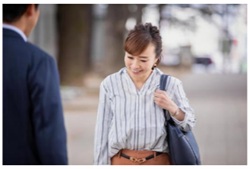
bowing (おじぎ・お辞儀)
Eshaku can be casual like saying “Hi”, ” Hello”, ” Thanks” or ” See you.” Bowing is like ” Nice to meet you.” or ” Thank you very much. I really appreciate,” sometimes with ” sir” or ” ma’am.” I would say bowing is an action of small ceremony, therefore it does not take place often.
When do you bow?
When you meet someone for the first time and leave him or her. In a case where your boss or a friend introduces you to someone, bowing is a must. If you only nod instead of bowing, you could be regarded as a rude person.
Or when you want to show your gratitude very much. But in my opinion, such an event does not occur frequently.
Situations in which I rarely bow
I don’t bow to my family, nor to my friends. Bowing is a polite behavior, not a friendly one. Therefore I rarely do the action.
However, I do when I meet the parents or siblings of my friends. Or as I mentioned above, when I’m really grateful to them, I bow.